
Artificial Intelligence is no longer a future concept—it is a present-day economic force reshaping how businesses operate, governments make decisions, and professionals build careers. By 2026, AI will be deeply embedded across industries such as finance, healthcare, marketing, manufacturing, logistics, and education. For students and working professionals alike, studying Artificial Intelligence in 2026 represents one of the smartest long-term career investments.
As automation, data intelligence, and machine learning accelerate, individuals with AI knowledge will not only secure better job opportunities but also position themselves as innovators and leaders in the global economy.
AI Is Powering Every Industry
AI is no longer limited to technology companies. In 2026, organizations across all sectors will rely on AI to enhance efficiency, reduce costs, and improve decision-making.
Examples of AI applications include:
-
Financial forecasting and fraud detection
-
Personalized marketing and customer experience
-
Predictive analytics in healthcare
-
Smart supply chains and logistics optimization
-
Human resource analytics and talent management
Professionals who understand how AI works—and how to apply it strategically—will be indispensable in almost every industry.
High Demand and Long-Term Career Security
One of the strongest reasons to study AI in 2026 is job market demand. While many traditional roles are being automated, AI-related careers continue to grow rapidly.
AI education prepares graduates for roles such as:
-
AI analyst and consultant
-
Machine learning specialist
-
Business intelligence manager
-
AI product manager
-
Strategic technology leader
AI skills are not short-term trends. They provide career resilience, enabling professionals to adapt as industries evolve.
AI Skills Go Beyond Coding
A common misconception is that AI is only for programmers. In reality, 2026 AI education focuses on business application, data interpretation, ethics, and strategic thinking.
Key AI competencies include:
-
Understanding machine learning concepts
-
Interpreting AI-driven insights
-
Using AI tools for business decision-making
-
Managing AI-powered systems
-
Ensuring ethical and responsible AI use
This makes AI degrees highly relevant for business leaders, managers, entrepreneurs, and executives, not just technical specialists.
AI and Business Leadership Are Converging
The future belongs to professionals who can bridge the gap between technology and leadership. Executives in 2026 will be expected to make AI-informed decisions, manage digital transformation, and lead AI-enabled teams.
Studying AI alongside business education develops:
-
Strategic thinking in data-driven environments
-
Innovation and problem-solving skills
-
Leadership in digital transformation projects
-
Competitive advantage in global markets
This convergence makes AI education especially valuable for MBA and DBA aspirants.
Global Opportunities and Higher Earning Potential
AI professionals benefit from global career mobility. Since AI skills are universally applicable, graduates can work across countries, industries, and organizational structures.
Benefits include:
-
International job opportunities
-
Remote and hybrid work flexibility
-
Higher salary potential compared to non-digital roles
-
Increased demand from startups and multinational companies
In 2026, AI expertise is a passport to global professional relevance.
Flexible Learning Fits Modern Professionals
Modern AI programs are designed for flexibility. Self-paced, online, and hybrid learning models allow professionals to upgrade their skills without pausing their careers.
Advantages of flexible AI education:
-
Learn while working
-
Customize learning speed
-
Apply skills immediately in real-world projects
-
Balance personal and professional commitments
This flexibility makes AI education accessible to students, professionals, and executives alike.
Ethical AI and Responsible Innovation
As AI adoption increases, ethical considerations become critical. Studying AI in 2026 includes a strong focus on:
-
Data privacy and security
-
Bias and fairness in algorithms
-
Regulatory compliance
-
Responsible and sustainable innovation
Professionals with ethical AI knowledge build trust, credibility, and long-term value for organizations.
Conclusion
Studying Artificial Intelligence in 2026 is more than acquiring a technical skill—it is an investment in future relevance, leadership potential, and career security. AI empowers professionals to understand technology, influence strategy, and lead innovation across industries.
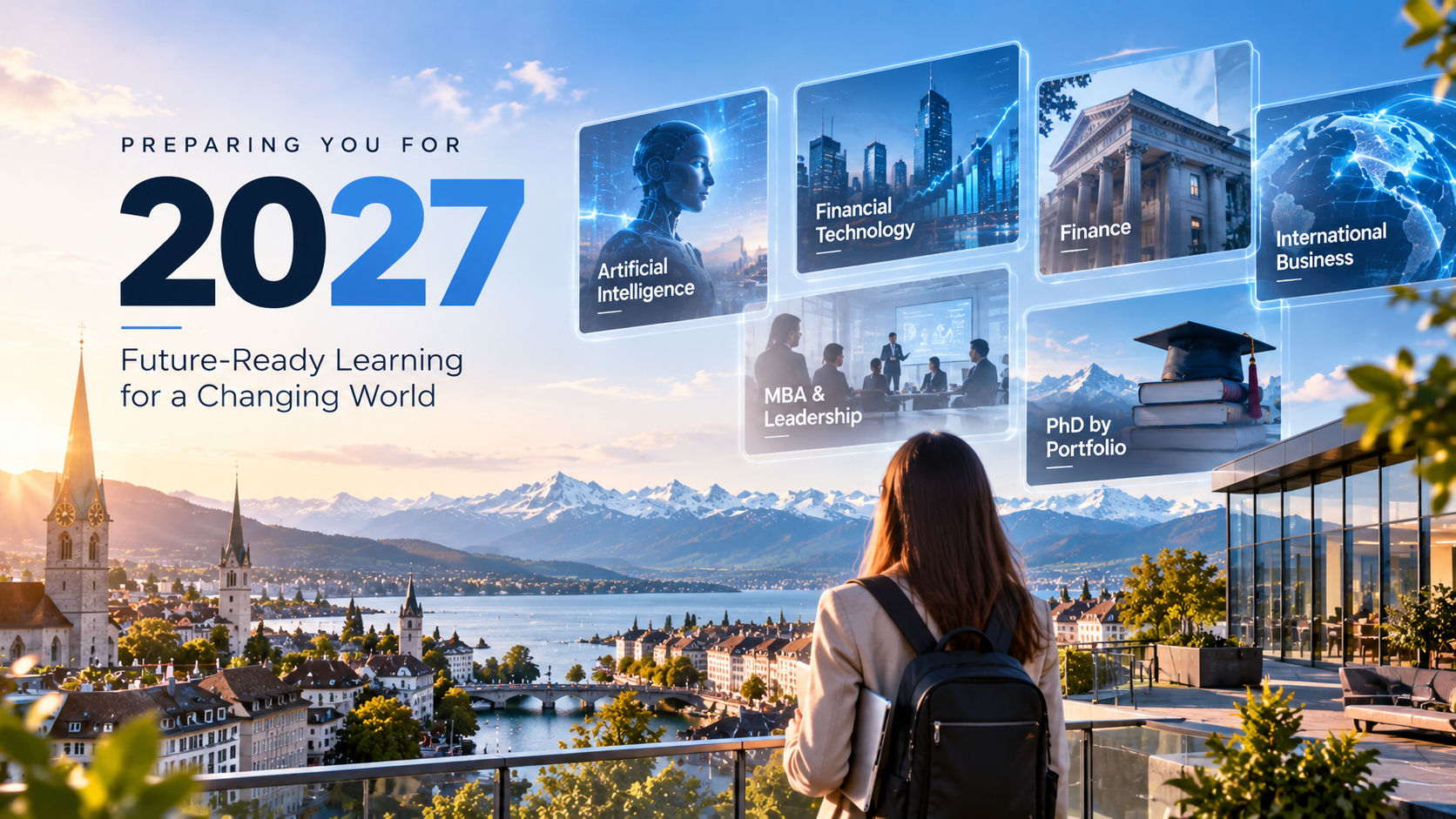
For those seeking globally recognized, future-ready education, AI-focused Bachelor’s, Master’s, MBA, and Doctorate programs provide the foundation needed to thrive in the digital economy and lead the future of business.